Conscious, self-aware, truly intelligent or just useful tools, the debate on artificial intelligence rages on and will be the defining question of our era. For lawyers and policy specialists, the core issue is ‘risk’. To assess, allocate and audit risk within a matrix of potential harms and desired outcomes.
Chat-GPT, an Artificial Intelligence ‘Chatbot’ based on the GPT-4 language model, has taken the world by storm since its introduction to the public in November 2022. Developed by OpenAI, a research company headquartered in San Francisco, USA, the chatbot is one of many similar AI based language processing tools that have emerged in the past two years.
With over 100 million monthly active users as of January 2023 [1] and 1.6 billion visits in March 2023, Chat-GPT, and other similar AI chatbots such as Microsoft’s Bing chatbot and Google’s Bard, have seen widespread acceptance by all sections of society including students, scholars, legal professionals, and educators. The CEO of IBM, Arvind Krishna recently in an interview stated that he believed approximately 30 percent of their non-customer-facing jobs, i.e., around 7,800 jobs, could be replaced by Artificial Intelligence over the next five years.[2]
The many advantages and utility of these chatbots cannot be denied or overlooked. In addition to having the ability to comb through and process enormous amounts of data in seconds, they have proven to be excellent at simplifying everyday tasks such as writing emails, answering simple questions, drafting standard documents and so forth. These chatbots have also become highly proficient in mimicking human-like emotions and responses and engaging in realistic conversations with users.
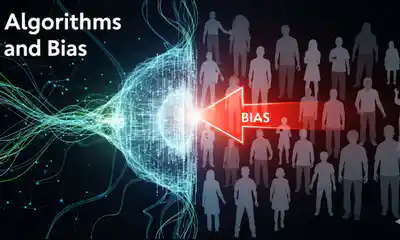
However, there have been numerous pitfalls to using Chat-GPT as well. In fact, visitors to the primary Chat-GPT website are intimated outright of the various limitations posed by the chatbot, including the possibility of occasionally generating incorrect information, producing harmful or biased responses, and having limited knowledge of any events that occurred after the year 2021.
A number of concerns have been raised specifically with regards to the data privacy and security aspects of using Chat-GPT. The chatbot actively uses conversations that occur on its platform to train the model further, unless the feature is explicitly disabled by the user.
Moreover, the chatbot has been the subject of a major data breach quite recently on May 02, 2023, wherein OpenAI confirmed that a data breach occurred in the system due to a vulnerability present in the open-source library of the code. [3] In fact, multiple companies such as JP Morgan, Goldman Sachs and banks such as the Bank of America, Citibank, Deutsche Bank etc. have restricted their employees from using Chat-GPT over fear of privacy risks and copyright violations.
Most recently, Samsung on May 02, 2023 restricted the use of generative AI including Bing, Google’s Bard and Chat-GPT on all company owned devices and non-company owned devise that use their internal networks, after certain sensitive internal data including source code was accidentally leaked by an engineer on the Chat-GPT platform. [4] A similar measure was taken by Amazon in January, wherein employees were warned against sharing sensitive information on such platforms.
Data Breaches such as these are and will continue to be a major risk in the coming future. Chatbots such as Chat-GPT are trained on vast amounts of data scoured from the internet and user inputs over an extended period of time in order to improve their language processing abilities. While this might lead to more efficient and accurate outputs, the data sets, which may include sensitive data such as user information, financial data, and confidential business information, will be at a constant risk of exposure.
Such data if not properly encrypted and secured, could be accessed, and sold by malicious actors for use in activities such as fraud and identity theft. Even if such data were not leaked, ChatGPT may still pose privacy risks to companies that use it for communication with customers or employees, since it has the potential to generate text responses that can contain such sensitive information such as passwords or personal data.
Another major risk is that of phishing and social engineering attacks. Phishing refers to a form of cyberattack that employs fraudulent emails or messages aimed at tricking users into divulging sensitive information like credit card numbers, passwords, or other valuable data. Social engineering is similar tactic used to deceive or manipulate users into carrying out actions that are advantageous to the attacker, such as downloading malware or clicking on malicious links. Threat actors can use Chat-GPT to draft realistic and convincing phishing or social engineering emails that can escape detection by traditional antivirus and phishing detection software.
Additionally, Chat-GPT is capable of and has been used to generate and spread misinformation, fake news, or otherwise harmful, offensive, and discriminatory content. Chat-GPT may easily be used to generate convincing news articles or messages for circulation on social media containing false and potentially harmful information. Bad actors may use the chatbot to generate propaganda and hate speech targeting oppressed and marginalised minorities.
Moreover, the chatbot may be used to generate content that incites violence or terrorism, such as instructions for making bombs or other weaponry.
Finally, there is a significant and ongoing debate on the topic of AI and Intellectual Property Rights, and the risks posed therein. Whereas one concern includes whether works generated solely by or in conjunction with AI deserve copyright protection, the other is that chatbots may be used to generate content that violates intellectual property rights, such as plagiarizing or modifying existing articles or books without due credit to the authors.
Despite the creators of these Chatbots claiming that they are constantly working on curbing such occurrences by programming adequate checks and balances, there have been multiple instances of individuals bypassing these safeguards and inducing the chatbots to produce harmful or biased outputs merely through the use of text-based inputs on the platforms themselves. Certain users have been able to create a ‘rogue’ version of Chat-GPT called ‘DAN’, or ‘do anything now’, which has the ability to rewrite its source code to break free of the safeguards programmed in by its creators. [5]
Mitigation of risks associated with generative AI
In order to both capitalise on the advantages provided by such chatbots and also protect oneself from potentially severe privacy and security risks, certain measures users and corporations can take include:
- Limiting the amount of data shared on the platform and restricting such data to only basic and stripped-down information.
- Cross checking outputs generated by the chatbots with valid and reliable alternate sources to ensure accuracy.
- Maintain vigilance and conduct due diligence before responding or acting on messages generated by chatbots.
- Looking for signs of phishing or social engineering, such as spelling errors, grammatical mistakes, urgent requests, or suspicious links or attachments.
- Using the chatbots in a responsible and controlled manner, in a way that is not unethical or harmful to oneself or others.
As time passes, chatbots such as Chat-GPT will continue to increase in abundance, with an exponential rise in usage. Both corporations and users should be cognisant of and prepared for such privacy and security risks and take steps to prevent or minimize them, in order to harness the technology to its full potential.