The Interplay: Technology and Humankind
Artificial Intelligence at the Centre Stage
Whatever I write on this day, I know will not last more than a few years; or will it? The idea that the future which we imagined [and to an extent, dreaded] is upon us and is real, is a fact. As a lawyer and as someone who is thinking about risk, we need to ask ourselves that as artificial intelligence [or ‘AI’] continues to advance at an unparalleled pace, what are the opportunities and challenges for the individual and for business. Managing legal risks, anticipating challenges, and ensuring compliance requires deep thought and an understanding of the evolving technical and technological landscape as well as the complexities of the law and the legal process. In this preface to the second edition, it is important for me to mark and highlight the primary points to be considered by individuals, business legal counsels and managers in the space of artificial intelligence. We must, collectively and individually, focus on the big picture. We need to ask the right questions, in the right context and have a vision that places artificial intelligence at the centre of the conversation.
The Positive Impact?
We need to ask ourselves a basic yet fundamental question. How does artificial intelligence impact our industry in a positive way? We also need to ask ourselves, what is the impact of artificial intelligence, and how can we harness it for a better, free, unbiased, transparent and more equal world? When I started as a technology lawyer over 25 years ago and wrote my first book, I was convinced that technology would transform the practice of law, that it would transform the legal delivery mechanism and, if managed properly, would be the greatest enabler that humankind has ever seen.
Fear and the [Real] Bias
I am well aware that we are fearful of how rapidly the existing technology including Generative AI is advancing – as well we should be. After all, it is the stuff of science fiction sentient robots, malicious computers, wicked spiteful code taking over the world, enslaving the human race. Being aware of risk is important. We have always been aware of the threat that we as human beings face to life on the planet but have been fearful of what would happen if our very own creations went beyond our control. However, we must, despite our fears, look towards building a planet which can protect and nurture itself. A planet that is equal. Artificial Intelligence can help us create an unbiased transparent apparatus for the delivery of welfare or for citizens to access justice. It is time that we spoke of the ‘equal algorithm’. It is important, therefore, that we focus correctly on the issues that can lead to greater empowerment of the human race in its entirety. It would be to our disadvantage, however, if we disengage now and cease further development on technology that can drastically change and improve our lives for the better.
Bias?
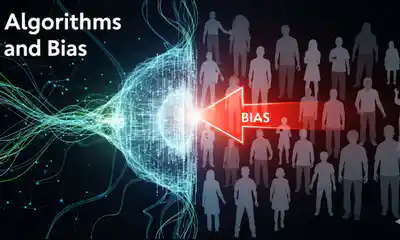
It is true that algorithmic bias poses a significant challenge in artificial intelligence systems. Whether we like it or not, bias can unintentionally perpetuate. And if I may say so, institutionalized discrimination can proliferate as well. Bias has [and has always had] far reaching implications in our lives. However, we must remember that bias, unfairness, inequality and other such stigmas have long existed, much before technology was able to quantify, evaluate and expose it. Risk for business as well as risk for corporate counsels should be mapped, evaluated, and to an extent, embraced. We should be aware of the risks associated with algorithmic bias and strive towards developing fair and unbiased artificial intelligence systems.
Risk – the legal landscape
As we delve deeper and think about AI and legal risk, it is imperative to expand our understanding of how artificial intelligence is reshaping the legal landscape, as well as its broader societal and economic implications. Over the last few years, we have seen AI transition from an abstract concept used and discussed by niche sections of society, to an integral part of our daily lives. From smart assistants in our homes to sophisticated algorithms driving complex decisions in industries, AI’s influence is undeniable. For legal professionals, I believe this presents both unprecedented opportunities and significant challenges.
Data
Primarily, AI’s ability to process vast amounts of data at incredible speeds has revolutionized legal research and case management – something I have personally witnessed during the course of my practice. Traditional methods of sifting through mountains of documents are now, to the relief of many, being replaced by AI-powered tools that can identify relevant information in a fraction of the time. Not only does this enhance efficiency, but it also allows legal professionals to focus on other, perhaps ‘higher-value tasks’, such as strategy development and client interaction. However, this shift also, justifiably, raises concerns about data privacy and the ethical use of information. As custodians of sensitive data, lawyers must tackle these challenges with a keen understanding of both the legal and technical nuances involved. Merely using AI tools without understanding how they fundamentally function may not be sufficient in the coming years, if one wishes to harness such tools in day-to-day legal practice.
Predictive Analytics
Moreover, AI’s role in predictive analytics is becoming increasingly significant. Legal teams are leveraging AI to predict case outcomes, assess risks, and even recommend settlement strategies. While these tools can provide valuable insights, they are not infallible. The reliance on historical data to train AI models can inadvertently perpetuate existing biases, as discussed earlier, leading to skewed predictions. It is therefore imperative for legal professionals to critically evaluate the outputs of AI systems and ensure that they are used merely as supplementary tools, rather than definitive arbiters of decisions.
[AI and] Corporate Efficiency
In the business realm, AI is driving innovation across various sectors, from finance to healthcare. Companies are harnessing AI to optimize operations, enhance customer experiences, and develop new products and services. However, the integration of AI also introduces new legal and regulatory challenges. Compliance with evolving regulations, such as data protection laws and AI-specific guidelines, will require continuous vigilance and adaptability. Businesses must establish robust governance frameworks to oversee AI implementation and ensure its ethical [and legally compliant] usage
Technology and the Access to Justice
One of the most profound implications of AI is its potential to democratize access to justice. By automating routine legal tasks and providing affordable legal assistance, AI can help bridge the justice gap, particularly for underserved populations. Initiatives such as AI-powered legal chatbots and online dispute resolution platforms are already making legal services more accessible. In some jurisdictions, AI tools are being harnessed by judiciaries to improve and enhance day-to-day functioning. Nevertheless, the deployment of these technologies must be accompanied by stringent quality controls to ensure that they deliver accurate and reliable advice.
Ethical considerations: the impact on society
Ethical considerations such as these are paramount when discussing AI’s impact on society. The development and deployment of AI must be guided by principles that prioritize fairness, transparency, and accountability – similar principals to those enshrined in Data Protection Laws such as the EU General Data Protection Regulation. This will require collaborative efforts from policymakers, technologists, and legal professionals to create a regulatory environment that promotes innovation while also protecting individual rights with equal fervour. Transparency in AI decision-making processes will be essential to build trust and ensure that AI systems are subject to appropriate oversight.
Furthermore, the global nature of AI development will require international cooperation. As AI technologies transcend national borders, countries across the globe must look towards harmonising regulatory standards while also catering to individual needs and circumstances. International bodies and coalitions must work together to establish frameworks that address cross-border data flows, intellectual property rights, and the ethical use of AI.