Artificial Intelligence is pervasive in almost every part of our life. Today, we are using artificial intelligence powered systems, software and apparatus. Our basic searches on the internet. The handy. The voice assistant software like Alexa and Siri, and the multiple filters on Snapchat and Instagram. More than this. The power of social media platforms prompts assistance and alert from banks recommendations on your favourite shopping sites. All of this is artificial intelligence. But for most of us, this intelligence. It's really not that smart. In real terms, not the intelligence. We would really call real intelligence, even though we might value it. These machines are copying and replicating machines. In short, algorithms that have been thought to and have learned to perform specific programmed tasks. This performance has been enabled by training. This software on 1000s, or millions of corrected examples. Even though. At present, some of these tasks like face, and speech recognition, are less than accurate given human standards. This has led to a fundamental question. Can, artificial intelligence, be taught or can intelligence be thought at all. In his famous book frames of the mind, published in 1983. Howard Gardner says and I quote, and intelligence is the ability to solve problems, or to create products that are valued within one or more cultural settings. Howard Gardner's theory of multiple intelligences. In this global linguistic intelligence mathematical logical intelligence, visual spatial intelligence, interpersonal intelligence, neuromuscular kinetic intelligence, interpersonal intelligence naturalistic intelligence musical rhythmic intelligence.
My question. Can a machine really be taught. All of these. But before that can be truly taught all of these things. Take for example, interpersonal intelligence that history has shown us that the greatest commanders of all time. Military geniuses like Alexander, Julius Caesar and Napoleon, all had extraordinary interpersonal skills. When it came to commanding troops in battle, they commanded. Intel intense loyalty. In most difficult and stressful times. Yet, when it came to the political side of interpersonal relationships, at some level. Each one of these. Find commander was found lacking in interpersonal political skills, which means that when it comes to a topic like interpersonal intelligence, even within this topic, you have probably multiple intelligences. My fundamental question - can all of this be taught to a machine?
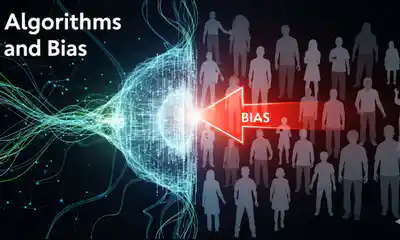
Building a machine that can think and do things that people can do, has been the goal of artificial intelligence, since the very beginning. And to be fair, it's been a long and intense struggle. The present hype does no good. And probably high has set us up for even greater failure. Amidst the hype. Artificial intelligence has become controversial and devices. But isn't it ironic that while most are talking about building intelligences on a human level, on a scale. What we really need to do is to develop intelligences that complement our abilities. Another point that might become controversial is the discrimination. Between and, because of programming algorithms that continue. Foster and reinforce stereotypes and biases, we are keen as a human race to discard. Certain unpleasant facets of our history as we move forward to progress, as a society, we need to align values. And these values have not only to be progressive, but also to be amenable to change. Another important topic is that of the super intelligent, evil, artificial intelligence.
That is why has the potential to become the master of the human race. And that has been the fear entrenched in your unconscious, but many feel that the evil AI is better reflection of our fields, rather than anything that is remotely realistic. We must acknowledge that human brains are the highest form of intelligence, known to us today, because the human brain is the ultimate multitasker. The centre of our intelligence, as well as life support. The entire body. Alan Turing's seminal paper damage machines think he addressed the fundamental question, how can we tell if a machine can think. Central to this question is the idea of consciousness. When you know, biologists and psychologists have not been able to identify the precise point where an infant becomes self-aware. Then, a machine. Communicating consciousness becomes a tough question. Indeed. Scientists believe that following Turing's example. One day we will be able to have machines that imitate human beings, so completely that human beings. Would we actually be able to believe that these machines are indeed conscious?