Book Publications
ExcellenceDive into a curated collection of impactful books, thought-provoking narratives, and insightful works that inspire, inform, and spark meaningful conversations.
Publications Library
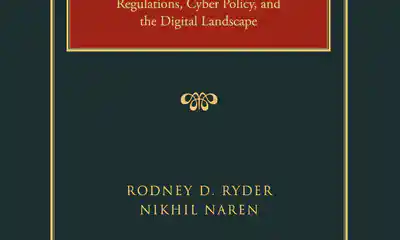
Technology Law: Regulations, Cyber Policy & Digital Landscape
Technology Law: Regulations, Cyber Policy, and the Digital Landscape is a comprehensive and authoritative guide to the rapidly evolving world of technology and digital regulations in India. This book provides an in-depth analysis of how emerging technologies are transforming governance, business, and society—and how law must adapt to protect rights, security, and innovation. Authored by Rodney D. Ryder and Nikhil Naren, both widely recognized for their expertise in technology and cyber law, the book navigates through India’s regulatory framework with clarity, precision, and practical insights. It explores the legal challenges ushered in by data protection, cybersecurity, artificial intelligence, digital platforms, and the expanding digital economy

Artificial Intelligence and Law [Challenges Demystified]
Artificial Intelligence [Al] is at the forefront of today's fast-paced technological landscape, driving unprecedented changes across all sectors. However, these advancements come with significant legal and ethical challenges. In this updated second edition of "Artificial Intelligence and Law: Challenges Demystified," we further explore the intricate relationship between Al and law and the various issues that arise from it. Building on the foundational insights of the first edition, this expanded volume covers the latest developments in Al technology. It addresses new regulatory measures, advancements in machine learning, and the growing impact of Al on privacy, security, digital commerce, and ethical standards. Through real-world applications and case studies, this book is a foundational guide for legal practitioners, policymakers, technologists, and scholars navigating the complex terrain of Al and law. This edition equips readers with the knowledge and tools to foster responsible Al innovation and ensure that legal systems remain robust and adaptive in rapid technological change. Join us in exploring the future of Al and its profound implications for the law.
Internet Law (Regulating Cyberspace and Emerging Technologies)
Bearing in mind the revolutionisation of information technology and consequently, electronic communication and commerce, a basic understanding of regulations and ordinances governing these areas become crucial. “Internet Law: Regulating Cyberspace and Emerging Technologies” has been written, as the name suggests, to be a book which enunciates the various aspects of cyber laws in India, including commerce, cyber-crimes, security, governance, technology, contracts, data privacy, etc. taking place through the medium of internet. The aim is to provide a ready reference on all aspects of cyber law in a jargon-free, comprehensive manner. The key features of this book include, but are not limited to, non-theoretical components to aid readers in a pragmatic manner, such as practical chapters dealing with law for compliance by corporations, digital brand management, detailed analysis of various features, principles and scope of laws that will be crucial in determining the future of technology laws in India, such as the general data protection regulation [GDPR] and the Personal Data Protection Bill along with its impact on fundamental aspects of cyber law such as data privacy, data collection, use and dissemination, especially with revolutionary campaigns like “Digital India” underway. The book also analyses digital identification systems like Aadhaar and domain names. In addition, this book explores several less charted territories of cyberspace law and electronic commerce such as intermediary's liability, electronic evidence, intermediary service providers, etc., with the help of an in-depth examination of path-breaking Supreme Court decisions, e.g. in Shreya Singhal and Puttaswamy. Additionally, the book is accompanied by an easy-to-access web-companion that provides up to the minute developments on each topic in the book, along with several others relating to the cyber world, making this book the most updated and relevant one out there!

Internet Law
In the present day when almost everything is digitalised, the role of Internet law becomes something that cannot be overlooked. This book focuses on the concept of law and policy in the Indian cyberspace and addresses the issue of jurisdiction in cyberspace. It also enumerates the significance of digital and electronic signature in the present world. The book comprehensively discusses about the concept of electronic evidence and its admissibility in India. The book also attempts to address the issue of data protection, privacy and corporate governance as well as various legal challenges in Internet banking. Key Features: • Conceptual guide in resolving the complexities of legal challenges faced by new media • Examines the early evolution of Internet case law in the United States • Critical analysis on the standing of India and other countries on digital and electronic signatures • Analyses the admissibility of electronic evidence in India and the amendments made to the Bankers Book Evidence Act and the Indian Penal Code • Addresses the issues of data protection, privacy and cybercrime

Cyber Crisis Management (Overcoming the Challenges in Cyberspace)
With the advent of big data technology, organisations worldwide are creating data exceeding terabytes in size. Due to the variety of data that it encompasses, big data always entails a number of challenges related to its volume, complexity and vulnerability. The need to manage Cyber risks across an enterprise—inclusive of its operations—is a growing concern as massive data breaches make news on an alarmingly frequent basis. The Internet too has grown enormously over the past few years, consequently increasing the risk of many untoward Cyber incidents that can cause irreparable loss to a corporate organisation.

Intellectual Property and Business (The Power of Intangible Assets)
Intellectual Property [IP] is one of the most vital assets for any business organization. It is a domain not restricted to lawyers alone; it is a crucial area of concern for business organizations, managers, and corporate leaders. ‘Intellectual Property and Business’ demonstrates how companies can deploy their IP not just as legal instruments but also as dominant and powerful financial assets, and as useful arsenal that can boost their business. The book aims to provide a basic understanding of various forms of IP that business organizations need to protect, and to analyse and understand IP management and strategy through case studies. It highlights these aspects of IP management through the lens of both a lawyer and a business manager.

Drafting Corporate and Commercial Agreements [SECOND EDITION] (Legal Drafting Guidelines, Forms and Precedents)
Drafting Corporate and Commercial Agreement focuses on structuring commercial contracts effectively with a specific emphasis on issues that stem from the effective management and commercialisation of contracts. The text is aimed at assisting lawyers, legal counsel and managers in drafting and structuring commercial agreements. The forms and precedents given are examples of drafting which should be used as a guide. Counsels are advised to structure their agreements based on the drafts, but at the same time it is also important, to create drafts afresh using the forms and structure provided in the text. The work aims to provide readers with an understanding of the major principles and approaches, to generate revenue by managing commercial contracts. The text not only highlights significant issues that are associated with contract management but is also an innovative analysis of important areas of business practice and contract management. The text is the first Indian resource to enter into the domain of commercial contracts such as share transfer and purchase agreements, project finance and intellectual property licensing and management. Contents include: Company Law: Forms and Precedents; General Commercial Agreements; Intellectual Property; Franchise Agreements; Project Finance; Deeds; Bonds,; Pledges; Arbitration; Lease; Trust; Society & Power of Attorney.

Brands, Trademarks and Advertising
Trademarks, copyrights and advertising are the ambassadors of commerce, helping businesses build and maintain awareness of -and demand for - their products and services. To support this vital function, our clients, ranging from start-ups to global multinationals, regularly count on our international Trademark, Copyright, Advertising and Brand Management team for a variety of services.

Intellectual Property and the Internet
Not Available

Guide to Cyber Laws (Information Technology Act, 2000, E-commerce, Data Protection & the Internet)
his book brings us to an observation the evolution of law in Cyberspace, Internet Related Legal Issues, Trade secrets and privacy, Tax aspects of Electronic Commerce Transactions, etc, the next section deals with laws relating to the Information Technology Act 2000 with sub-sections like Digital Signature, E-Governance, Attribution, The Cyber Appellate Tribunal, etc, the fiuther section contains : the Indian Rules and regulations regarding Information Technology Rules 2000, ISP Guidelines, another section dealing with Intellectual Property Act, etc.